
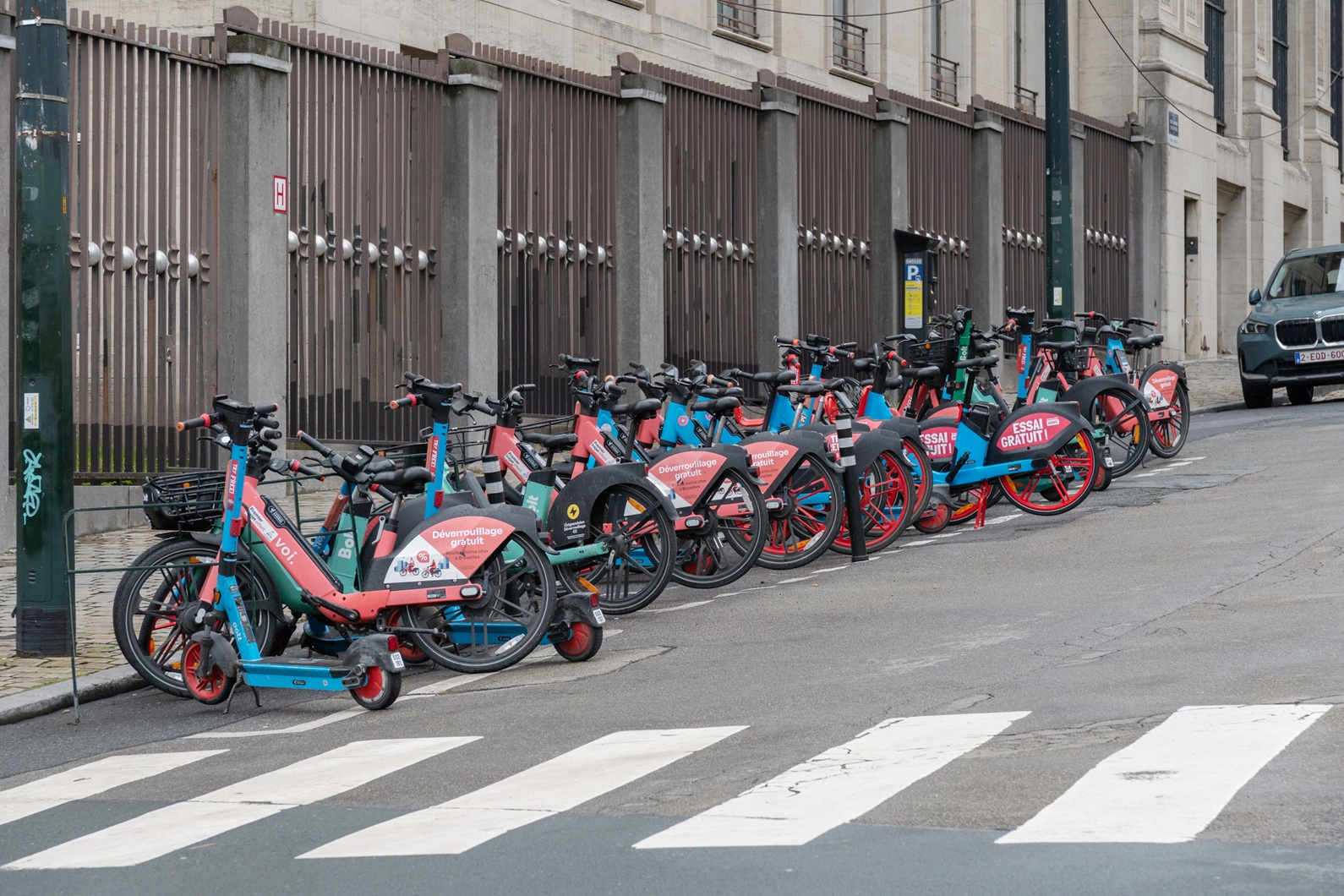
Brussels bans e-scooters. But is that really solving the problem?
Brussels has announced that shared e-scooters will be banned from January 2027. Having been part of London’s original e-scooter rollout, I know first-hand how complex these decisions are. City leaders are navigating real concerns — safety, public space, community impact — and I respect that. This is not easy terrain.
But I keep coming back to the same question: when a minority of riders behave irresponsibly, is removing the entire service the right response? Because what we know from the data is that the majority of journeys are regular, purposeful trips — people getting to work, to appointments, to transport connections. These people lose out with a ban.
There’s also something worth examining in how we frame the problem. Shared e-scooters are among the most trackable, speed-capped and regulated vehicles on our streets. When we remove them, we don’t solve the underlying issues — we simply push demand towards private devices that carry none of those controls. That feels like an important unintended consequence. According to Micro-mobility for Europe, a coalition of shared service operators, injury risk per million kilometres for shared e-scooters has fallen by 19.9% between 2021 and 2025 — even as usage has grown significantly. According to Professor George Yannis of the National Technical University of Athens, who worked with the coalition on the data, the evidence points to a sector where safety is improving, not deteriorating, as it scales. That is not reflected in the current wave of banning scooters.
While Brussels had clear reasons for its ban—the number of injured users had risen by 25% in one year (and the city said bikes are safer), scooters were blocking access on pavements, and scooters had been used in 25 shootings. But other cities have faced safety and access issues and introduced interventions to counter this rather than bringing in an outright ban.
I think there’s a consistency question around how we respond to antisocial behaviour depending on the mode of transport involved — and it’s one our cities need to think carefully about if we want transport policy to feel fair and trusted by the communities it serves.
Through the Shared Micromobility Alliance, we bring cities and the industry together in the same room to work through the challenges openly. Not to lobby, but to build the kind of shared understanding that leads to better, evidence-based policy. It is why we have launched the Shared Micromobility City Performance Index so that there is comparative data available for policymakers and city leaders to understand how shared micromobility is impacting communities.
Brussels now joins Paris, Madrid and Prague in stepping back from shared e-scooters. Every city will have its own context and pressures, and those deserve to be understood. But it does feel like an opportune moment to ask whether a more collaborative, evidence-led approach might open up different options before a final decision is reached.
A genuinely mixed micromobility fleet — e-scooters, bikes, and proper infrastructure working together — remains the right ambition for our cities. I hope Brussels, and others, might find value in that kind of dialogue before the next decision is made.
Photo: Sofia Solomonova | Dreamstime.com