
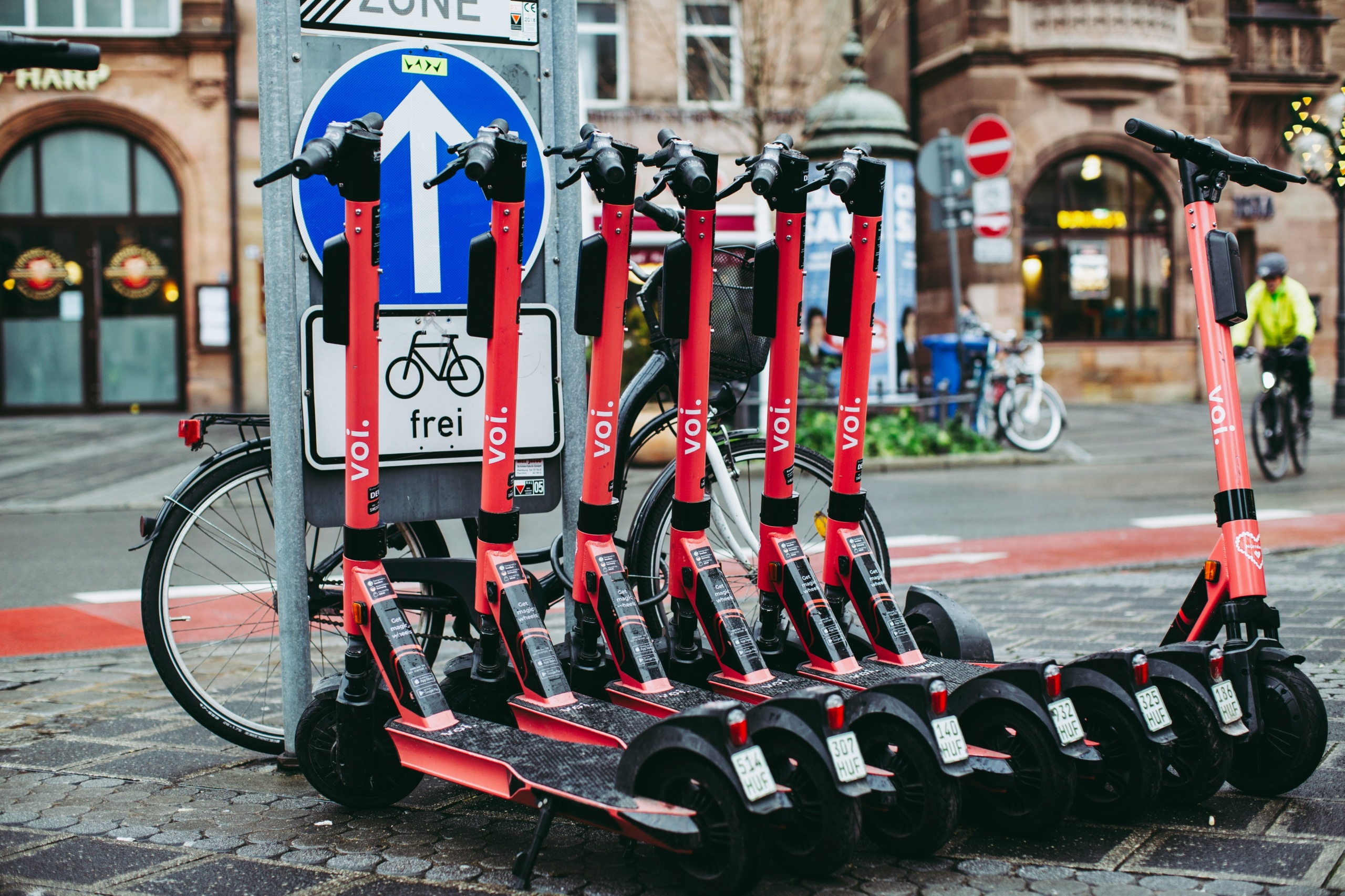
Structured parking emerges as a cornerstone of shared micromobility management
Cities across Europe are tightening up on how shared scooters and bikes are parked, as unmanaged free-floating models give way to more structured approaches aimed at protecting public space while maintaining convenience.
Parking is increasingly seen as a key lever for service quality, compliance and public acceptance, with hybrid systems –combining designated bays, limited free-floating areas and selective use of public bicycle racks –becoming more common.
 According to a new best-practice guide from the Shared Micromobility Alliance, cities are converging on clearer and more visible parking models following years of resident complaints and operational challenges.
The guide finds that docked systems offer high compliance but require significant investment, while designated bays provide a more balanced option when they are sufficiently dense and clearly marked. Virtual parking zones without physical markings are widely discouraged, and free-floating parking is increasingly confined to lower-density areas.
City examples from Milan, Stockholm and Milan show how these approaches are being applied.
The SMA resource ‘A best practice guide to parking for shared scooters and bikes’ is an output co-created by the Infrastructure & Space Working Group of the Shared Micromobility Alliance and is available now for SMA members on the online CTI Community.
Photo by Markus Spiske on Unsplash